Chapter 13 — Performance Evaluation and Decision Making
13.1 From anomaly to action
Monitoring exists to support decisions. A well-run program defines, in advance, what each level of each parameter means and what must happen next. This removes hesitation during an event.
13.2 Trigger, action, and alarm levels
Most plans define tiered levels:
- Normal / green — within expected range; routine monitoring.
- Alert / yellow — deviation warrants increased frequency and review.
- Action / orange — predefined response: notify engineer, restrict access, increase surveillance, prepare response.
- Alarm / red — predefined emergency response: evacuate downstream, notify regulator, activate emergency plan.
Levels are set per parameter and per location, informed by design and failure-mode analysis (Chapter 2).
13.3 Decision support, not replacement
Instruments and dashboards support the responsible engineer's judgment; they do not replace it. A reading in the green does not excuse a visible crack; a single yellow does not mandate evacuation. The plan documents who decides and how.
13.4 Emergency response
When red levels or visible distress occur, the response is operational, not just technical:
- Evacuation of downstream populations and on-site personnel per the emergency plan.
- Notification of regulator and stakeholders.
- Containment where safely possible (lower pond, divert flow).
- Documentation of actions and observations for later review.
13.5 Independent review
Higher-consequence facilities benefit from independent periodic review of the monitoring data and the program itself — a fresh set of eyes on trends the operating team may have normalized.
Act on acceleration
History shows catastrophic tailings failures are often preceded by accelerating movement or pore-pressure rise that was observed but not acted upon. Predefined action levels exist precisely to force a response before a threshold is crossed.
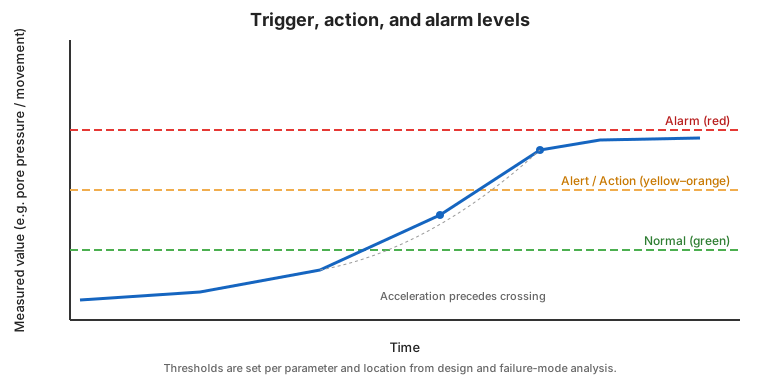
Figure. Trigger, action, and alarm levels. The monitored signal crosses thresholds; acceleration often precedes the crossing (ICOLD Bulletin 194 / facility surveillance practice).
13.6 Key takeaways
- Define trigger/action/alarm levels in advance, per parameter and location.
- Monitoring supports — never replaces — responsible engineering judgment.
- Predefine emergency response: evacuate, notify, contain, document.
- Independent review catches normalized trends.