Chapter 9 — Measurement of Load, Strain & Temperature
9.1 Monitoring forces in structures
Where geotechnical works interact with structures — struts, anchors, piles, linings — monitoring the load and strain in those members confirms they behave as designed and reveals distress early.
9.2 Load cells
Load cells measure force. Common types:
- Vibrating-wire — automated, widely used in struts, anchors, and piles.
- Hydraulic — robust, good for high forces.
- Electrical (strain-gage) — versatile, sensitive to lead effects.
Applications include braced-excavation strut loads, anchor prestress, and pile load tests.
9.3 Strain gages
Strain gages measure deformation per unit length, from which stress can be inferred:
- Bonded wire / foil — surface-mounted on steel or concrete.
- Vibrating-wire — embeddable in concrete or attached to steel.
- Telltales — simple devices indicating relative movement across a section.
9.4 Temperature measurement
Temperature affects nearly every other instrument: it changes sensor output, concrete strain, and pore pressure. Thermistors, RTDs, thermocouples, and mercury thermometers are used to:
- Compensate other readings for thermal effects.
- Detect freezing, hydration heat, or thermal-driven movement.
9.5 Interpretation cautions
Strain in concrete includes shrinkage and creep; separate these from load effects using temperature and companion specimens. Load-cell readings must be referenced to a verified zero.
Temperature is not an afterthought
Ignoring temperature compensation is a leading cause of misinterpreted strain and pore-pressure data. Measure temperature wherever thermal effects are plausible.
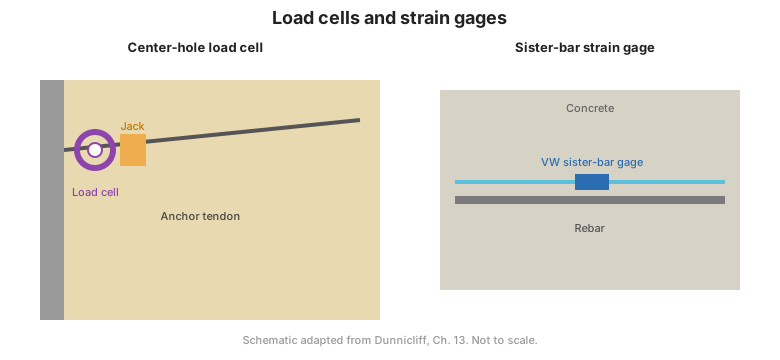
Figure. Load cells and strain gages. A center-hole load cell measures anchor or strut force; a sister-bar gage measures strain in a rebar (Dunnicliff, Ch. 13).
9.6 Key takeaways
- Load cells and strain gages confirm structural members behave as designed.
- VW, hydraulic, and electrical types serve different needs.
- Temperature affects almost every reading — measure and compensate it.
- Separate shrinkage/creep from load effects in concrete.